-
Shop
- Advanced Technologies
- AI Career Advantage Collection
- AI Skills Mastery 2026 Collection
- Bathroom
- Best-Sellers
- Car Accessories
- Dating & Social Skills
- Digital Resources
- AI Skills
- Beauty
- Car Buying & Ownership
- Cozy Feast Collection
- Electronics & Technology
- Emotional Intelligence
- Financial Education
- Home Styling & Organization
- Mindset
- Online Business
- Parenting & Child Development
- Personal Style & Fashion
- Pet Lifestyle & Wellness
- Positive Thinking
- Self Confidence
- Sleep Improvement
- Smart Life with AI
- Stress Management & Relaxation
- Wellness
- Yoga & Fitness
- Yoga & Mind-Body Practices
- Education & Learning
- Family & Parenting
- Fashion
- Furniture
- Gadgets
- Health & Beauty
- Health & Wellness
- Home & Garden
- Home Electronics
- Jewelry
- Kids & Babies
- Kitchen
- Lighting
- Online Business for Beginners
- Patio, Lawn & Garden
- Personal Growth
- Pet Care
- Pet Supplies
- Pets
- Shoes
- Smart Home Living Guides
- Sport & Outdoors
- Stress Relief & Relaxation
- TikTok Growth & Monetization Mastery
- Travel
- Travel Planning
- Wealth
- Wealth Building
- Budgeting & Saving
- Cryptocurrency Investing
- Debt Management
- Entrepreneurship & Business Growth
- Family Finance & Budgeting
- Financial Independence
- Financial Mindset & Psychology
- Financial Planning
- Frugal Living & Expense Hacks
- Goal Setting
- High-Income Skills
- Investing Basics
- Leadership
- Motivation
- Networking & Mentorship
- Passive Income Strategies
- Real Estate Investing
- Side Hustles
- Stock Market Investing
- Popular
- Best deals
How to Talk to Your Mechanic: A Repair Checklist
25% off on product page · save $1.66
How to Talk to Your Mechanic: A Repair Checklist
Start With What You Notice
You don’t need to identify the failed part before visiting a shop. Describe what you hear, feel, see, or smell. “I hear a squeal when I brake at low speed” gives the technician a clearer starting point than “I need new brakes.”
Note when the problem began and whether it happens consistently. Include your approximate speed, whether you were braking, accelerating, or turning, and whether the engine was cold or warm. Mention weather conditions, warning lights, and recent repairs.
A short recording or photo can help you describe an intermittent noise or warning light. If the car seems unsafe to drive, call the shop and ask about towing rather than risking the trip.
Check the product’s listed specifications when evaluating start with what you notice.

Use a Simple Repair Conversation Checklist
Walk through the concern with the service advisor, then ask them to repeat it back. This gives you a chance to correct details before the technician starts diagnosing the car. If the symptom is difficult to reproduce, ask whether a technician can safely accompany you on a short drive to observe it.
Next, ask what diagnostic tests the shop expects to perform, the diagnostic charge, and whether that charge will be applied toward a repair. Use these prompts to keep the conversation focused:
What to Say and Ask at the Repair Shop
| Step | What to share or ask |
|---|---|
| Describe | The car squeals when I brake at low speed, especially after it rains. |
| Clarify | What tests will you run, and what is the diagnostic fee? |
| Approve | Please contact me with the estimate before starting additional repairs. |
| Follow up | What was repaired, and is there a warranty on the work? |
Give the shop a reliable phone number and ask how it will contact you. Being available to answer questions can help prevent delays, especially if the technician finds something unexpected.
Featured in this guide
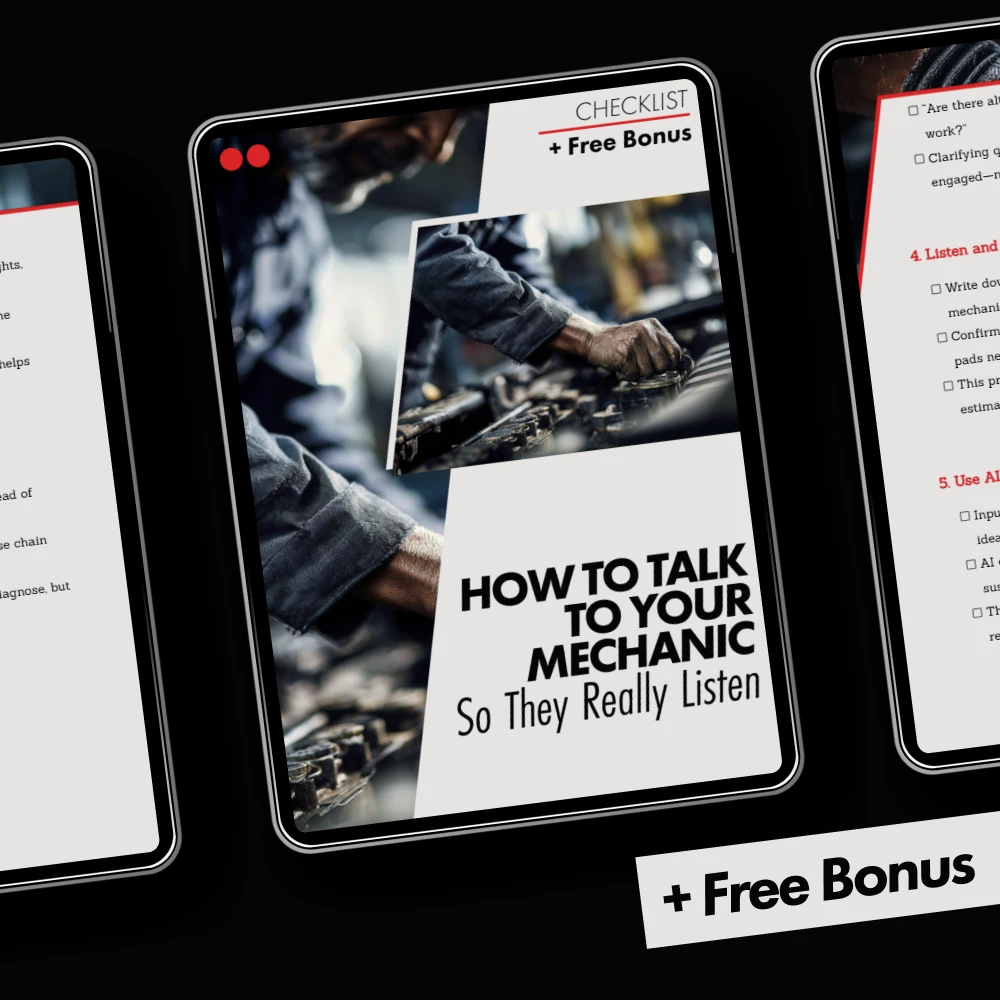
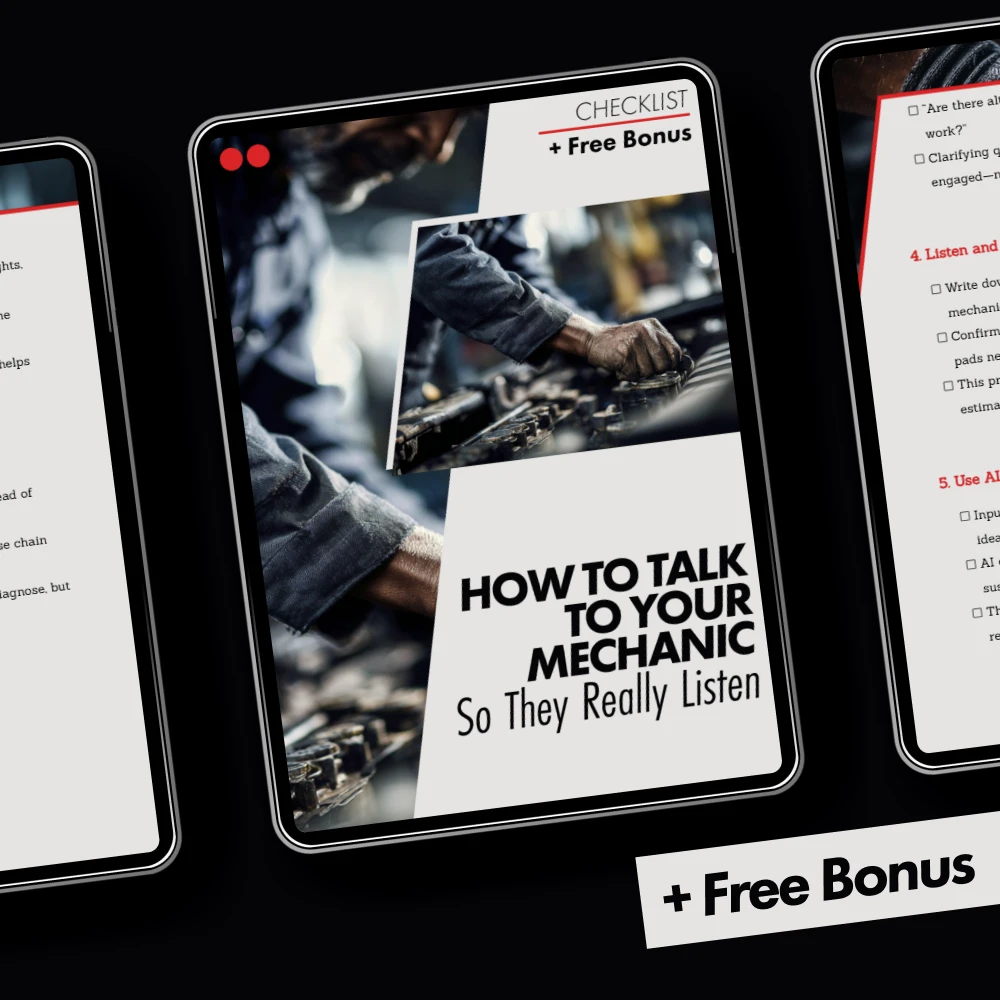
How to Talk to Your Mechanic So They Really Listen – Smart Car Repair Communication Checklist | how to talk to your mechanic so they listen
Understand the Estimate Before You Agree
Ask the mechanic to explain the diagnosis and how the proposed repair addresses your concern. If alternatives are available, ask about their costs and trade-offs, and which work is urgent versus what can reasonably wait.
Review the estimated total, including parts and labor, and ask when the work is expected to be finished. Find out whether a warranty applies and what it covers. An estimate is not necessarily the final bill, so ask the shop to contact you before exceeding your spending limit or performing additional work.
Keep the estimate and final invoice. At pickup, compare the invoice with what you approved and ask about any differences.
Speak Up When Something Is Unclear
Ask for a plain-language explanation whenever you need one. If a recommendation doesn’t seem to match your concern, try: “Can you show me what led you to that conclusion?”
Be cautious if a shop pressures you to authorize unexplained work, refuses to provide an estimate, or won’t explain changing charges. A second opinion may be worthwhile for an expensive repair when it is safe and practical. Ask whether the car can be driven safely first; if not, discuss towing.
Keep Your Questions Handy
Our Smart Car Repair Communication Checklist is a resource for preparing a more organized conversation. It can be a useful choice if you want to bring your concerns and questions together before you speak with a mechanic.
Compare related options such as Double-Sided Grid Wall Panels with Hooks for Displays & Organization to match features, dimensions, and use case before choosing.
Before choosing, compare the product details with your daily routine, available space, care needs, and preferred setup. The strongest option is usually the one that fits the intended use clearly and remains simple to clean, store, and check before repeat use.
FAQ
What are the three C’s in mechanics?
The three C’s are concern, cause, and correction. You describe the concern, and the technician identifies the cause and records the correction.
What is the 30-60-90 rule for cars?
The 30-60-90 rule refers to a traditional maintenance schedule at roughly 30,000, 60,000, and 90,000 miles. Your vehicle’s actual service intervals may differ, so follow its owner’s manual and maintenance schedule.
See if How to Talk to Your Mechanic So They Really Listen – Smart Car Repair Communication Checklist | how to talk to your mechanic so they listen fits your setup
Emotional Alchemist: Meaning and How to Practice
Nov 14, 2026
Does Health Insurance Matter When Filing Taxes?
Nov 14, 2026













Leave a comment