-
Shop
- Advanced Technologies
- AI Career Advantage Collection
- AI Skills Mastery 2026 Collection
- Bathroom
- Best-Sellers
- Car Accessories
- Dating & Social Skills
- Digital Resources
- AI Skills
- Beauty
- Car Buying & Ownership
- Cozy Feast Collection
- Electronics & Technology
- Emotional Intelligence
- Financial Education
- Home Styling & Organization
- Mindset
- Online Business
- Parenting & Child Development
- Personal Style & Fashion
- Pet Lifestyle & Wellness
- Positive Thinking
- Self Confidence
- Sleep Improvement
- Smart Life with AI
- Stress Management & Relaxation
- Wellness
- Yoga & Fitness
- Yoga & Mind-Body Practices
- Education & Learning
- Family & Parenting
- Fashion
- Furniture
- Gadgets
- Health & Beauty
- Health & Wellness
- Home & Garden
- Home Electronics
- Jewelry
- Kids & Babies
- Kitchen
- Lighting
- Online Business for Beginners
- Patio, Lawn & Garden
- Personal Growth
- Pet Care
- Pet Supplies
- Pets
- Shoes
- Smart Home Living Guides
- Sport & Outdoors
- Stress Relief & Relaxation
- TikTok Growth & Monetization Mastery
- Travel
- Travel Planning
- Wealth
- Wealth Building
- Budgeting & Saving
- Cryptocurrency Investing
- Debt Management
- Entrepreneurship & Business Growth
- Family Finance & Budgeting
- Financial Independence
- Financial Mindset & Psychology
- Financial Planning
- Frugal Living & Expense Hacks
- Goal Setting
- High-Income Skills
- Investing Basics
- Leadership
- Motivation
- Networking & Mentorship
- Passive Income Strategies
- Real Estate Investing
- Side Hustles
- Stock Market Investing
- Popular
- Best deals
New vs Used Cars: The Real Cost of Your Next Ride
20% off on product page · save $2.25
New vs Used Cars: The Real Cost of Your Next Ride
Start With the Cost of Ownership
We recommend comparing vehicles over the same ownership period and expected annual mileage. A five-year estimate gives you a practical way to see beyond the first payment while leaving room for differences in operating costs.
For each vehicle, add the purchase price, taxes, fees, loan interest, insurance, fuel, maintenance, and estimated repairs. Then subtract its estimated resale value. The result is an estimate of what ownership may cost over your chosen period.
Depreciation—the loss in value between purchase and resale—is easy to overlook because it does not arrive as a monthly bill. A new car may lose more value in its early years, while a used car may have higher maintenance costs. Both affect your bottom line.
Keep the monthly payment in perspective, too. Extending a loan term can make a payment look more manageable while increasing the total interest you pay. It can also leave you owing money for longer as the vehicle ages.
Put New and Used Cars Side by Side
Consider an illustrative comparison of cash purchases over five years at equal mileage. Purchase figures include taxes and fees; financing interest is excluded.
These figures are examples, not forecasts. Replace them with local quotes and estimates for your shortlisted vehicles.
Check the product’s listed specifications when evaluating put new and used cars side by side.
Featured in this guide
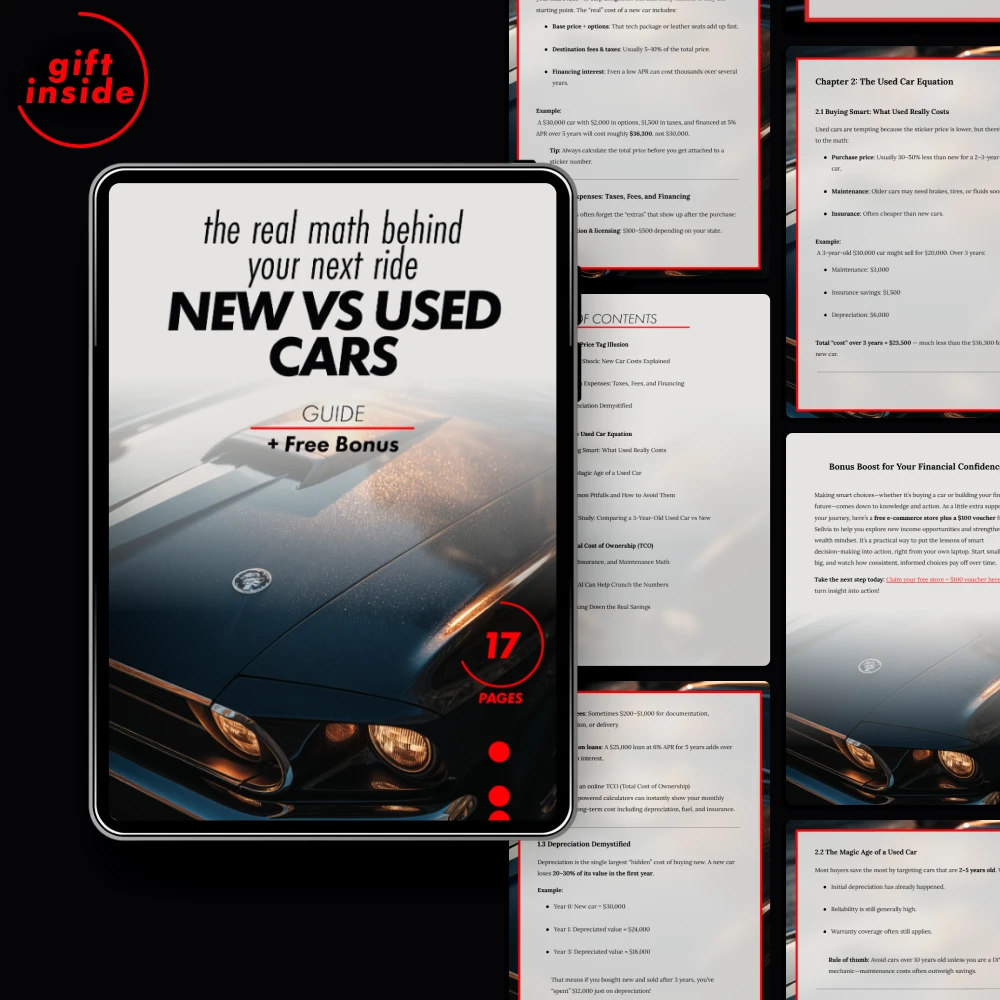
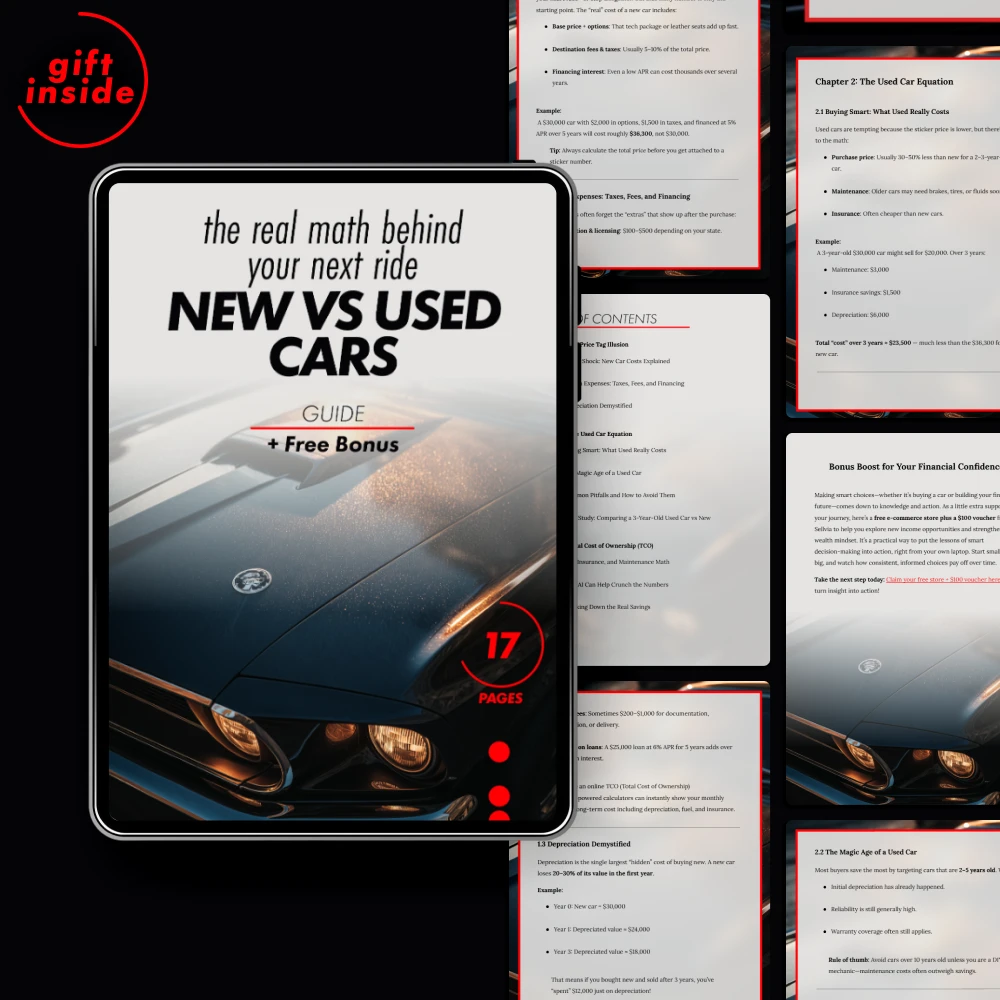
New vs Used Cars: The Real Math Behind Your Next Ride – Ultimate Guide to Car Buying Decisions
Compare Financing and Dealer Offers
Ask for the out-the-door price, including taxes and fees. Compare the annual percentage rate, loan term, down payment and total amount paid. Use the same down payment and term where possible.
Get a preapproved loan offer and ask the dealer for a comparable written quote. If a rebate requires particular financing, calculate the total cost with and without it. Keep the vehicle price, trade-in value and optional add-ons separate, and ask for an itemized breakdown.
Match the Car to Your Priorities
A new car may appeal if you value a full manufacturer warranty, current features and a known ownership history. Review warranty limits and exclusions rather than assuming every repair is covered.
A used car can have a lower entry price, but condition matters as much as age and mileage. Obtain a vehicle history report and arrange an independent inspection before buying. The report may reveal reported events; the inspection can identify current mechanical or structural concerns.
Get insurance quotes for the specific vehicles on your shortlist, and leave room for routine service and unexpected repairs.
Make Your Decision
Our team suggests starting with two or three vehicles that meet your needs. Gather local prices, insurance quotes, financing offers and estimates for fuel, service and resale. Compare them over the same period, then weigh the costs against your priorities for warranty coverage and vehicle history.
For a focused resource on the decision, explore our New vs Used Cars: The Real Math Behind Your Next Ride guide.
Compare related options such as The Smart Guide to Perfect Skin Exfoliation: Digital eBook on Skin Care, Exfoliation Routines & AI Tips to match features, dimensions, and use case before choosing.
FAQ
Is it better to buy new than used?
Neither is always better. Compare total ownership costs, condition, warranty coverage, financing terms, and the features that matter to you.
Do dealers not like when you pay cash?
Dealer preferences vary, and some dealers earn revenue from arranging financing. Compare the full out-the-door price and financing terms before deciding how to pay.
Why does Dave Ramsey say not to buy a new car?
Dave Ramsey has cautioned against buying new cars largely because they can depreciate quickly. Whether that concern outweighs a new car’s warranty and other benefits depends on your finances and priorities.
What does Suze Orman say about buying a new car?
Suze Orman has emphasized affordability and avoiding car payments that strain your finances. Apply that principle by considering the full purchase and ownership cost, not just the monthly payment.
Is it better to buy a new or used car in 2026?
There is no universal answer. Compare current local prices, loan rates, insurance quotes, and expected ownership costs for the specific vehicles you are considering.
See if New vs Used Cars: The Real Math Behind Your Next Ride – Ultimate Guide to Car Buying Decisions fits your setup













Leave a comment